1,000+ Entertainment Design Cases, 15+ years Amusement Industry Experience - 12 Design info@12design12.com+86 15360475354


How the Right Design Turned Opening Day into a Sellout?
One Box Family Sports Park By 12 Design.
A 5,000 sqm case study in FEC design, modular construction, and revenue‑driven space planning
The Problem: Another FEC Opening. Another Slow Start.
If you’ve been in the family entertainment center business for any length of time, you know the pattern.
You spend months—sometimes years—planning. You pour capital into equipment, leasehold improvements, and marketing. You hire staff, train them, and get everything ready for the big day.
And then opening day comes.
A trickle of curious locals. A few birthday parties booked in advance. A lot of empty space and nervous looks from investors.
Six months later, you’re still trying to figure out how to get bodies through the door. The rent is due. The equipment is sitting idle. And you’re starting to wonder if you made a huge mistake.
This is the reality for too many FEC owners. And it’s almost never because the concept is bad. It’s because the design didn’t do its job.
Here’s the truth: great FEC design isn’t just about making things look pretty. It’s about engineering foot traffic, maximizing dwell time, and creating an experience so compelling that people can’t stop talking about it.
One Box in Sichuan, China, proves exactly why this matters.
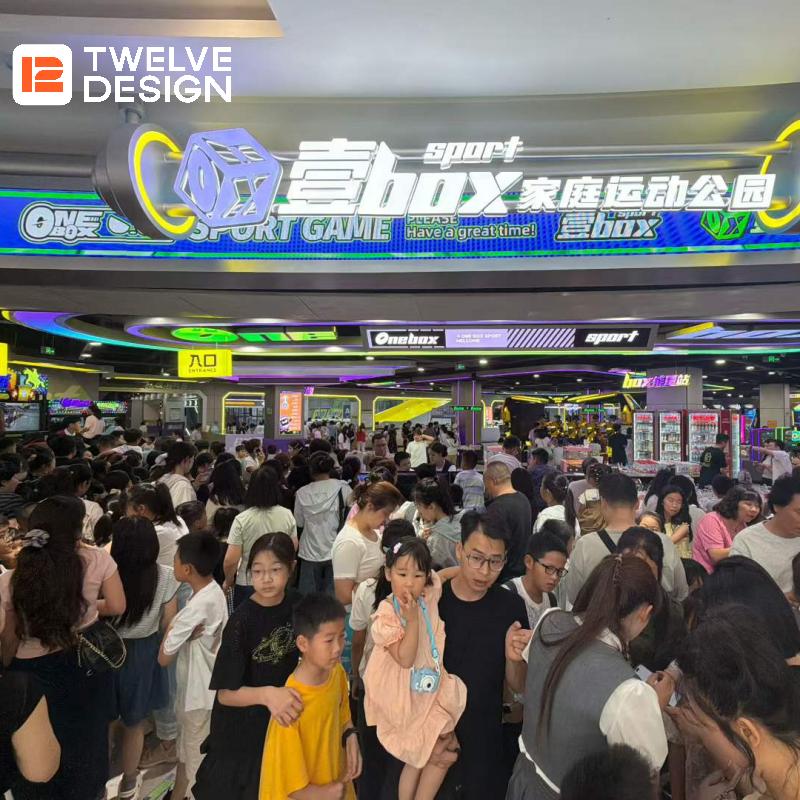
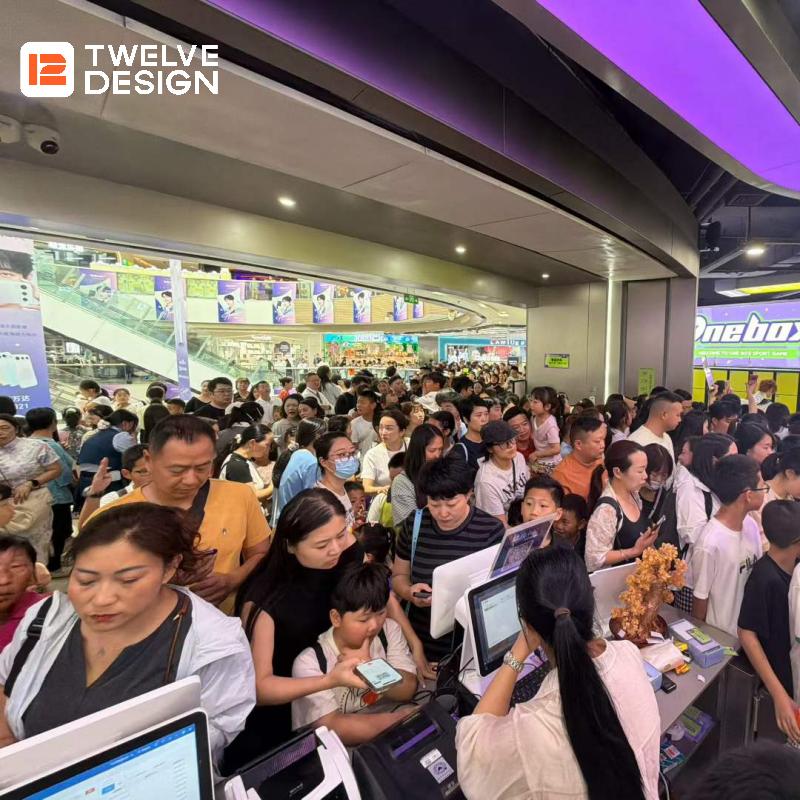
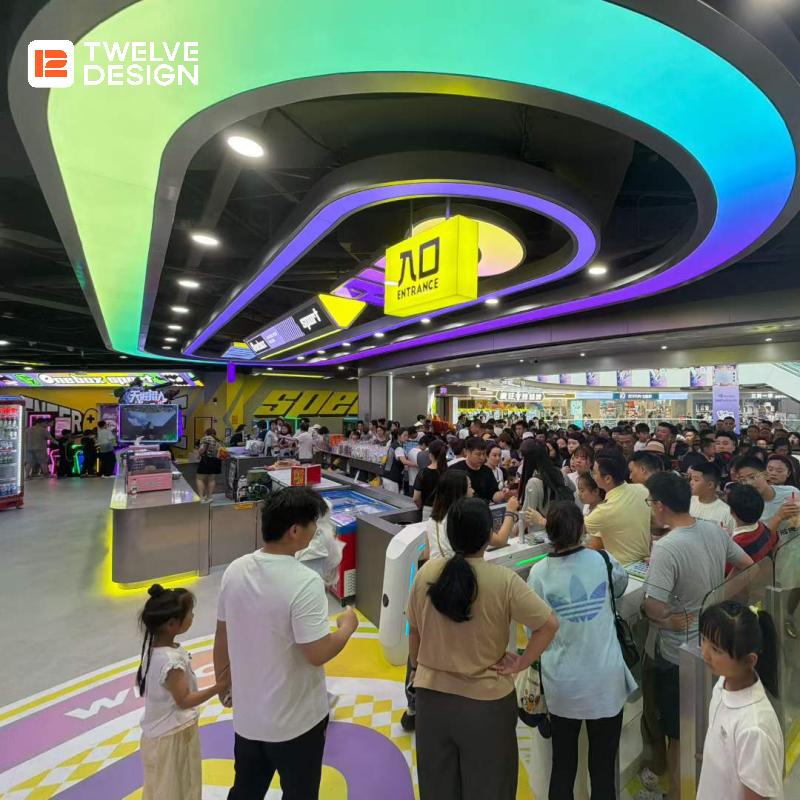
The One Box Story: 5,000 Square Meters of Pure Energy
One Box isn’t your typical family entertainment center. It’s a 5,000 square meter family sports park—two levels of high‑energy attractions designed to keep every member of the family engaged, from toddlers to grandparents.
The brief was straightforward: create a space that opens fast, draws crowds immediately, and delivers a strong return on investment from day one.
The challenge? Most FEC projects of this scale take 6 to 12 months to build. By the time you open, you’ve burned through so much capital that you’re already under pressure to perform.
One Box opened in weeks, not months.
And opening day? Standing room only. Wall‑to‑wall families. A line out the door.
Here’s how we made it happen.
The Design Philosophy: Every Square Meter Has a Job
Before we talk about construction, we need to talk about space planning.
One Box is 5,000 square meters split across two levels. That’s a lot of square footage. But square footage alone doesn’t drive revenue—how you use it does.
The design started with a simple question: who’s coming, and what do they want?
Level One: Family‑Friendly Zones
- Soft play areas for younger children
- Gentle attractions and interactive games
- Parent lounge with clear sightlines to play areas
Level Two: High‑Energy Competition
- VR arenas and simulator racing
- Climbing walls and obstacle courses
- Team‑based competitive attractions
This zoning strategy solved one of the biggest problems in family entertainment: parent disengagement.
If parents are bored, they won’t come back. If they’re engaged, they’ll stay longer, spend more, and bring their friends.
By creating distinct zones for different energy levels and age groups, One Box ensures that everyone has a reason to be there—and a reason to stay.
The Modular Advantage: From Months to Weeks
Here’s where things get interesting.
Traditional FEC construction follows a predictable pattern: hire an architect, get permits, start construction, deal with delays, deal with cost overruns, and finally open—months late and over budget.
One Box took a different approach: modular construction.
Instead of building everything on‑site, we fabricated the decorative elements, themed props, and modular systems in our own 4,000 square meter factory.
The benefits were immediate:
Speed. While traditional construction was still in the permitting phase, we were already cutting, molding, and assembling components in the factory.
Quality control. Factory conditions mean consistent results. No weather delays. No subcontractor screw‑ups. Just precision manufacturing, every time.
Zero disruption. Installation happened after hours and in sections. The venue never had to shut down for construction.
Future‑proofing. Want to change the theme for a holiday promotion? Swap out modular panels and props. No construction required.
The result? One Box went from factory to open in 2‑4 weeks.
The IP Factor: Why One Box Became a Social Media Sensation
Here’s something most FEC owners don’t think about: your space is your best marketing channel.
One Box wasn’t just a well‑designed sports park. It was a branded experience that turned every visitor into a promoter.
The IP character—Mini Box—wasn’t an afterthought. It was baked into the design from the very first sketch.
Hand‑drawn concept art → digital line art and coloring → 3D modeling and rendering → foam and fiberglass carving → final installation at the venue entrance.
The result? A larger‑than‑life mascot that kids had to take pictures with. And those pictures ended up on social media, generating free organic buzz that no amount of paid advertising could replicate.
One Box didn’t just open. It went viral.
The Numbers That Matter
Let’s talk about what really matters to FEC owners: return on investment.
Industry data shows that the global family entertainment center market is projected to grow from $30.2 billion in 2024 to $49.2 billion by 2030. But growth isn’t automatic. It comes to operators who get the fundamentals right.
For One Box, the fundamentals delivered:
Opening day traffic: Standing room only. The venue reached capacity within hours of opening.
Social media buzz: User‑generated content flooded local platforms. No paid influencer campaign needed.
Repeat visitation: The modular design allows for easy layout changes, so regulars always have something new to discover.
Operational efficiency: Because the space was designed with traffic flow in mind, staffing requirements are optimized. Fewer bottlenecks. Happier customers. Lower labor costs.
What FEC Owners Can Learn from One Box
If you’re planning a family entertainment center—or thinking about renovating an existing one—here are the takeaways:
1. Design for all ages, not just kids.
The “sportainment” trend is real. Family entertainment centers that cater exclusively to children are being outperformed by venues that offer something for everyone. Parents want to play too. Design for them, and they’ll stay longer and spend more.
2. Prioritize speed to market.
Every month of construction is a month of lost revenue. Modular construction isn’t just faster—it’s smarter. You open sooner, start generating revenue sooner, and reduce the risk of cost overruns.
3. Build a brand, not just a building.
IP matters. A cohesive brand identity—from the mascot at the entrance to the color palette throughout the space—creates an emotional connection that keeps people coming back. And it turns customers into advocates.
4. Think about the second visit, not just the first.
If your space looks the same every time, people get bored. Modular design lets you refresh the experience without major construction. New themes for holidays. New layouts for different seasons. New reasons to come back.
5. Don’t underestimate the power of good design.
This one sounds obvious, but it’s the most overlooked factor in FEC success. Good design isn’t just about aesthetics. It’s about traffic flow, dwell time, revenue per square foot, and operational efficiency. When design is treated as a strategic function—not just a decorative one—the results speak for themselves.
The Bottom Line
One Box didn’t succeed by accident. It succeeded because every decision—from the zoning strategy to the modular construction to the IP development—was made with a single goal in mind: driving revenue from day one.
Opening day wasn’t a gamble. It was the predictable result of a well‑executed design strategy.
If you’re ready to stop guessing and start building a family entertainment center that actually works, we should talk.
12 DESIGN has delivered over 1,000 domestic and global projects, serving more than 2,000 clients worldwide. From concept to construction, we handle everything—so you can focus on what matters: running a successful business.
12 DESIGN is a global leader in themed entertainment space design, with 15+ years of experience in family entertainment centers, arcades, sports parks, and immersive venues. Our modular approach combines creative design with efficient construction, delivering high‑fidelity results in weeks, not months.


Amusement Future, in 12Design
